

Peacekeeping vs. Peacemaking: Moving Beyond Fight or Flight
The Ministry of Reconciliation: A Protocol for Peace
God reconciled us to himself through Christ and gave us the ministry of reconciliation. - 2 Corinthians 5:18
Understanding the Conflict Reflex
Introduction to Biblical Conflict Resolution
We often default to two instinctive responses when faced with conflict: Fight, which involves confrontation and aggression, or Flight, which means avoiding the issue altogether. However, Jesus introduces a transformative third option: Pursue. This path encourages us to actively seek reconciliation and understanding, fostering genuine peace rather than temporary silence.
By choosing to pursue, we align ourselves with the principles of peacemaking, where the goal is restoration and healing. This approach requires courage and intentionality, moving beyond our natural reflexes to embrace a more Christ-like response to conflict.
Choosing to Pursue: A New Path
Defining Peacekeeping and Peacemaking
The Difference Between Quiet and Restoration
Anchor our behavior in the gospel. We resolve conflict not just to be nice, but because we are ambassadors of a God who resolved His conflict with us.
Ambassadors of Grace
Representing the King
“All this is from God, who reconciled us to himself through Christ and gave us the ministry of reconciliation: that God was reconciling the world to himself in Christ, not counting people’s sins against them. And he has committed to us the message of reconciliation. We are therefore Christ’s ambassadors...” — 2 Corinthians 5:18-20
Paul reminds us that we were once enemies of God. God didn't wait for us to apologize; He took the initiative to reconcile through the cross. Because we have received this "Ministry of Reconciliation," we lose the right to hold grudges. You cannot be a recipient of Grace and a hoarder of Grace at the same time. When we are in a conflict, we are "Ambassadors." An ambassador does not represent their own feelings; they represent the King.
Being an ambassador means embodying the values and message of the one we represent. We must act with integrity, ensuring that our actions align with the teachings of Christ. This role requires us to be active participants in the ministry of reconciliation, bridging gaps and fostering peace in our communities. By doing so, we honor the grace given to us and fulfill our calling as representatives of the Kingdom.
Discussion Question 1
1. Why is it easier to hold a grudge than to initiate a conversation?
Discussion Question 2
2. Verse 19 says God was "not counting people's sins against them." How does keeping a mental "scorecard" of what someone did to you damage a relationship?
Discussion Question 3
3. If we are Christ’s ambassadors in the middle of an argument, how should that change our tone of voice and our goal?
Understanding the Process
The step-by-step approach to resolving personal conflicts as outlined by Jesus, focusing on direct and private communication.
“If your brother or sister sins, go and point out their fault, just between the two of you. If they listen to you, you have won them over. But if they will not listen, take one or two others along...” — Matthew 18:15-16
The text says, "Go and point out their fault, just between the two of you." The goal is explicitly stated: "You have won them over." The goal isn't to win the argument; the goal is to win the brother. Privacy protects the other person's reputation, which makes it easier for them to listen without being defensive.
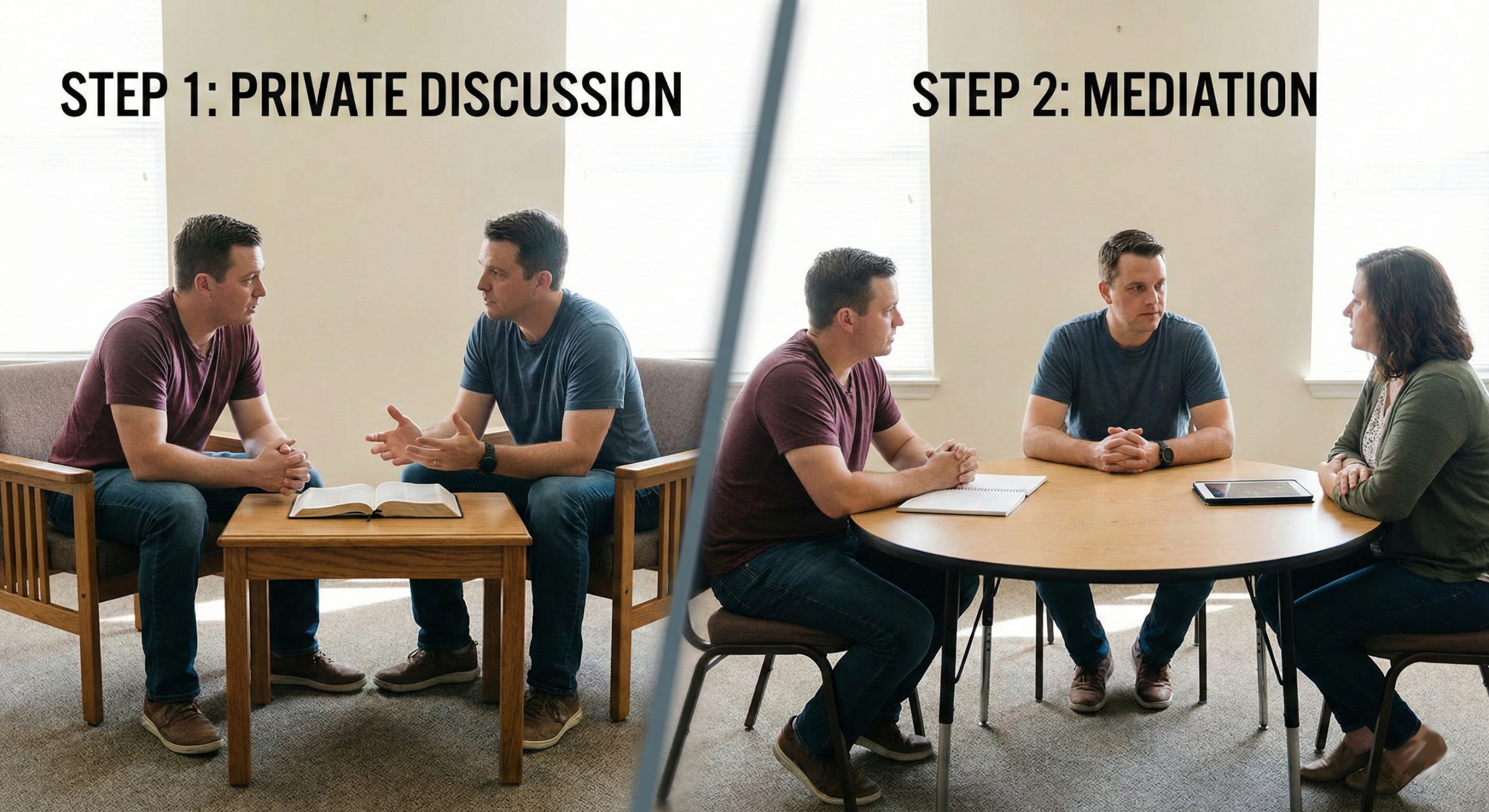
Initiate a Private Conversation
Begin by addressing the issue directly with the person involved, ensuring the conversation remains private to foster understanding and reconciliation.
Involve Trusted Witnesses
If the initial conversation doesn't resolve the issue, bring one or two trusted individuals to help mediate and provide additional perspectives.
Seek Community Support
As a last resort, involve the broader community to seek resolution, maintaining a focus on restoration and peace.
Discussion Question 1
1. Why is "just between the two of you" so important? What happens when we involve a third party too early?
Discussion Question 2
2. Have you ever had someone come to you privately to resolve an issue? How did you react?
Discussion Question 3
3. How do we differentiate between "pointing out a fault" in love versus just criticizing someone?
Winning Hearts, Not Arguments
“If it is possible, as far as it depends on you, live at peace with everyone.” — Romans 12:18
The Path to Peace
Romans 12:18 acknowledges the complexity of reconciliation, highlighting that while peace requires mutual effort, forgiveness is a personal choice. We are tasked with extending the invitation to peace, regardless of the other person's response. This principle empowers us to act with grace and integrity, focusing on our responsibility rather than the outcome.
Forgiveness is an act of liberation, freeing us from the burden of resentment. It allows us to move forward, even if reconciliation is not immediately possible. By prioritizing forgiveness, we align ourselves with the teachings of Christ, who calls us to be peacemakers in a world often divided by conflict. Our commitment to peace reflects our dedication to living out our faith authentically.
Discussion Question 1
1. What does "as far as it depends on you" look like practically? When can you say, "I've done my part"?
Discussion Question 2
2. How do we handle the pain when we try to reconcile, but the other person rejects us?
Discussion Question 3
3. Is there a difference between "forgiving" someone and "trusting" them again? (Note: Forgiveness is instant/commanded; trust is rebuilt over time).
The Empty Chair
Think of a relationship in your life that is currently fractured—a friend, a family member, a coworker.
- Have you gone to them privately (Matthew 18)?
- Are you acting as an ambassador of Jesus, or an ambassador of your own hurt feelings (2 Cor 5)?
- Have you done everything that depends on you (Romans 12)?
We cannot force them to change. But we can obey God by making the first move. Let’s pray for the courage to make that phone call or send that text this week.
The 3 Rules of Biblical Conflict:
- The Goal is Restoration, not Victory. (Win the person, not the fight).
- The Circle is Small. (Keep it private. Gossip kills reconciliation).
- The Initiative is Yours. (Don't wait for an apology. Jesus didn't wait for us).
Restoration: The Ultimate Goal
Conflict resolution should aim to restore relationships, not to achieve personal victory. This principle aligns with the biblical call to reconciliation.
Privacy: Keeping the Circle Small
Address conflicts privately to maintain dignity and respect, following the biblical guidance of Matthew 18:15.
Download Your Guide to Biblical Conflict Resolution
Equip yourself with practical tools and insights to navigate conflicts biblically. Download our comprehensive Leader Guide and start fostering peace today.



0 Comments